Spider Web with Candies: A Designer's Honest Review
When I first opened the Spider Web with Candies embroidery file, I was genuinely curious how a Halloween design built around candy and webs would translate into real stitched goods. The title alone suggests something playful but not overly childish, and that balance is hard to get right. After stitching it out on several fabric types and testing it in a few product scenarios, I want to share what this design actually feels like to work with, where it shines, and where you might want to pause before committing thread to fabric.
First Impressions: Mood, Shape, and Visual Personality
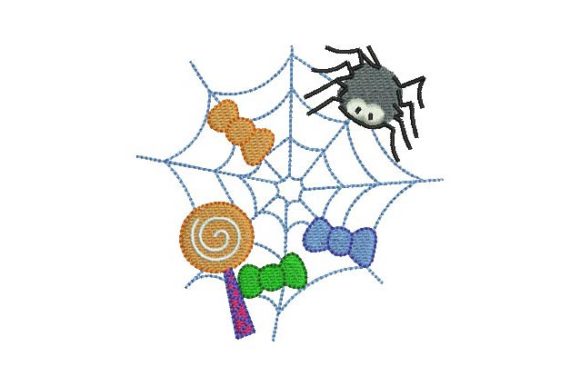
The design carries a whimsical but clean look. The spider web is not overly intricate, which works in its favor for a 4x4 hoop size. There is enough structure in the web lines to give it that recognizable Halloween feel without becoming a dense mess of stitches. The candies are placed in a way that feels natural, almost as if they are caught in the web rather than just floating there. That small storytelling detail matters when you are selling a finished product to someone who values themed embroidery.
The mood here is fun, slightly spooky but kid-friendly. It does not lean into horror or gore, which makes it a strong candidate for children's apparel, as the product description suggests. If you are an Etsy seller or a small shop owner looking for a Halloween design that parents would actually put on a toddler's sweatshirt or a baby's onesie, this hits that sweet spot. The visual personality is approachable, not edgy, and that expands your customer base significantly during the Halloween season.
Real Case: Preparing a Custom Sweatshirt for a Boutique Order
I decided to test Spider Web with Candies on a pre-shrunk cotton sweatshirt for a local boutique order. The customer wanted something Halloween-themed but not overwhelming, something a seven-year-old would wear to school and to a fall party. I hooped the sweatshirt carefully with a medium-weight cutaway stabilizer, making sure the fabric did not stretch out of shape. The design stitched cleanly, with the web lines forming crisp satin stitches that held their shape on the knit fabric. The candies filled in smoothly with a basic fill stitch, and the thread color changes were logical and easy to follow.
The finished piece looked polished. The web had enough presence to read as a web from a few feet away, but the candies added the detail that made the customer smile. That reaction is exactly what you want when you are building a handmade product business. The design did not pucker, and the stitch density felt appropriate for the fabric weight. I can see this working just as well on a tote bag, a pillow cover, or a kitchen towel for fall decorating. For a personalized gift, it carries enough personality to feel intentional without being too niche.
Performance Across Different Product Types
I ran Spider Web with Candies through several product mockups beyond the sweatshirt. On a tote bag, the design sat nicely centered on the front panel and did not fight the fabric grain. The web lines remained sharp, and the candies added a pop of color that drew the eye. For baby embroidery, the scale is appropriate for a 4x4 hoop, which means it fits well on a onesie, a bib, or a small blanket corner. The playful vibe works for infants and toddlers without looking out of place.
On caps and hats, you will want to be cautious. The design has some width due to the web shape, and curved surfaces can distort the symmetry if you do not use a stabilizing strategy. I tested it on a structured cap with a stiffener and a cutaway stabilizer, and it came out acceptable, but the candies near the edges of the design did shift slightly. If you sell embroidered patches, this design patches out nicely on twill with a hot-cut border. The web shape gives the patch a natural edge that does not feel forced.
For aprons, tea towels, and nursery decor, the design works without issue. The stitch count is reasonable, and the thread colors are not excessive. If you are a craft business producing multiple units for a fall market or a Halloween craft fair, this design will not bog down your production time. It stitches out efficiently, and the visual result justifies the thread investment.
Where to Use This Design Carefully
No design is perfect for every surface, and Spider Web with Candies has a few limitations worth noting. First, the 4x4 hoop size means the design is compact. If you plan to put it on a large adult sweatshirt or a blanket, it may feel small and underwhelming unless you center it on a patch or a pocket area. Consider scaling up the embroidery file if your machine allows resizing, but watch the stitch density when you do, as some details may distort.
Second, the web lines rely on satin stitch and running stitch elements that need good tension. On very stretchy fabrics like lightweight knits or ribbed cuffs, you may get some pull or puckering if you skip the proper stabilizer. I recommend a tearaway or cutaway stabilizer depending on the fabric. Test on a scrap first, especially if you are stitching on dark fabric. The thread colors in the design may need adjustment for contrast if you use a black or very dark background. A white or orange thread on a dark web can lose the detail of the candies.
Third, if you are creating commercial embroidery items that will go through frequent washing, like baby blankets or kitchen towels, the candies use a fill stitch that could snag if the fabric is loosely woven. Use a high-quality thread and test a wash cycle before selling in bulk. For personalized gifts that will be displayed or worn occasionally, this is less of a concern.
Visual Appeal, Product Value, and Customer Trust
When a customer buys a handmade product with an embroidered design, they are paying for the look, the durability, and the thought behind it. Spider Web with Candies delivers on the look. The design reads clearly, and the candy details give it a story that children and parents both enjoy. That translates into higher product value because the design does not feel generic. It feels like someone curated it for the season.
For brand consistency, if you run a boutique that sells holiday-themed apparel or home goods, this design fits a playful but clean aesthetic. It does not rely on scary imagery, so it works for a wider audience. Customer trust grows when your finished items stitch out cleanly every time. I did not encounter thread breaks or misalignment issues during my tests, which suggests the digitizer understood how the design would behave on fabric.
The giftability factor is strong. A Halloween gift for a child, a new parent, or a friend who loves fall decorating, this design works as a patch, a onesie, or a small tote. Buyer engagement increases when the design has recognizable elements like candy and webs, because people immediately connect it to the holiday. That instant recognition helps your Etsy listings stand out among generic Halloween designs.
Practical Designer Notes Before You Stitch
Here is what I recommend before you use Spider Web with Candies in your own projects, whether you are a hobbyist, a creative entrepreneur, or an apparel decorator.
- Test on scrap fabric first. This is not negotiable. Every fabric behaves differently. Stitch the design on a piece of similar weight and weave before you commit to your final product.
- Check thread color contrast. The candies and web lines need to stand out from the fabric. If you are stitching on dark fabric, consider recoloring the web lines to a lighter shade. If you are stitching on white or cream, the default colors should work well.
- Review stitch density. The design does not feel overly dense, but if you resize it larger, the density may thin out. If you resize it smaller, the details may crowd. Stay close to the original size for best results.
- Confirm hoop size. This design is intended for a 4x4 hoop. If your machine uses a different hoop, check the file dimensions before loading. Do not assume it will fit without editing.
- Inspect small details. The candies have small elements that need clean thread tension. A dull needle or loose tension can blur those details. Use a sharp, new needle for best results.
- Test in black and white mockups. Before stitching, look at the design in a single color to see if the shape reads well without color cues. If it looks confusing in black and white, the layout may need adjustment.
- Compare light and dark fabric backgrounds. The design behaves differently on each. Light backgrounds let the web lines pop. Dark backgrounds can hide the web unless you use a contrasting thread.
- Use proper stabilizer. For knits, use cutaway. For wovens, tearaway works. For caps, use a stiffener. Do not skip this step, especially for commercial embroidery projects where quality must be consistent.
- Check licensing. Before selling finished items or digital products, confirm the license terms for Spider Web with Candies. Some digital embroidery files allow commercial use, others do not. Respect the creator's terms to avoid issues.
- Plan your product. Decide if you are making custom apparel, embroidered patches, tote bags, or holiday gifts. The design fits multiple categories, but each product type requires a slightly different approach to hooping, stabilizer, and placement.
Final Thoughts on Using This Design in Real Projects
Spider Web with Candies is a solid choice for anyone who needs a Halloween design that feels playful, clean, and child-friendly. It performs well on a range of fabrics and products, from sweatshirts to tote bags to baby embroidery. The visual appeal is immediate, and the stitch quality holds up under normal use. It is not a design for every product, but for the right project, it delivers exactly what a customer wants: a fun, recognizable holiday motif that looks professional and lasts.
If you are an Etsy seller or a small shop owner building a Halloween collection, this design deserves a spot in your rotation. It stitches efficiently, it dresses up any blank garment, and it gives your customers a reason to smile. That is the kind of embroidery project that builds repeat business and a strong reputation for quality handmade goods.