Couple in the Car Applique Design: A Designer’s Hands-On Review
When I first opened the Couple in the Car Applique Design, I was immediately struck by its narrative warmth. This isn’t just another heart or floral motif for Valentine’s Day—it tells a story. A couple driving together, shoulders aligned, facing the road ahead. It feels intimate without being overly sentimental. As someone who tests dozens of machine embroidery designs each month for both personal projects and client work, I’ve learned to spot designs that stitch out cleanly and designs that look great on screen but fall apart in the hoop. This one sits firmly in the first category, with a few important caveats I’ll walk through from a practical, real-world angle.
First Impressions: Mood, Shape, and the Right Project Fit
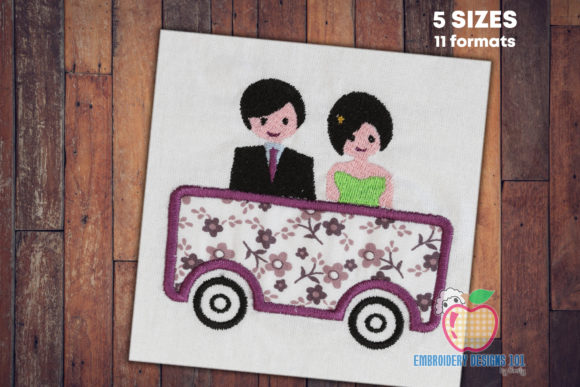
The design captures a quiet, connected moment between two people in the front seat of a car. The silhouette is clean, with enough detail to read as two distinct figures yet simple enough to work beautifully as an applique design. The mood is romantic but understated—perfect for Valentine’s Day projects that aim for elegance rather than cliché. I immediately thought of a custom sweatshirt embroidery for a couple’s date night gift or a tote bag design for a small shop’s Valentine collection. It could also work well on a pillow cover, a baby embroidery project (think a nursery keepsake with a vintage car theme), or even a personalized gift for a wedding or anniversary.
The layout is horizontal, which gives it a natural sense of motion. That means it fits best on the front center of a garment, the center panel of a bag, or the middle of a quilt block. I wouldn’t recommend it for narrow spaces like cap fronts or sleeve cuffs unless you resize it carefully. The design thrives when it has room to breathe.
Stitching Performance: How It Behaves in the Hoop
I tested this applique design on a mid-weight cotton sweatshirt and a linen tote bag, using a medium hoop size that the design fit comfortably. The steps are separated by color changes, which made the process straightforward. The tack-down stitch for the applique fabric was clear and easy to follow, and the satin stitch border came out crisp—no gaps, no pulling, even on the linen, which can be tricky with looser weaves.
One thing I appreciated was the stitch density. The fill stitch areas inside the car and the figures were balanced—dense enough to cover the background fabric well but not so heavy that the garment puckered. I used a tear-away stabilizer for the sweatshirt and a cut-away for the tote, and both performed well. If you’re stitching on stretchy fabric like a jersey t-shirt, I’d recommend a cut-away stabilizer to prevent distortion around the satin stitch edges.
The running stitch details—things like the steering wheel and the outline of the car—were fine enough to add character but not so thin that they broke under tension. I did notice that on very dark fabric, a lighter thread color for the outline made the design pop more. On a black sweatshirt, for example, I switched the car outline to a soft silver, which gave it a subtle retro feel.
Real-Life Use Case: A Valentine’s Gift Sweatshirt
Let me walk through a recent project. A client wanted a custom embroidered patch-style design on a cream-colored hoodie for her boyfriend for Valentine’s Day. She wanted something that felt personal but not cartoonish. The Couple in the Car Applique Design was a natural choice. I stitched it with a navy blue applique fabric for the car body, a soft red for the heart detail in the window, and cream for the figures. The result was understated, romantic, and genuinely unique. The client was thrilled, and the hoodie became one of the most complimented pieces at their small gathering.
If you’re an Etsy seller or run a craft business, this design could easily anchor a Valentine’s Day collection. Pair it with a matching tote bag design or a set of embroidered patches that customers can iron onto jackets or backpacks. It also works beautifully as a handmade product for personalized gifts—think anniversary presents, couple’s matching sweatshirts, or a baby embroidery project for a child born around February.
Where to Use This Design Carefully
No design is perfect for every surface, and the Couple in the Car Applique Design has a few limitations worth planning around.
- Small hoop sizes: If you try to squeeze this into a 4x4 hoop, you’ll lose the facial detail and the car’s proportions. I recommend at least a 5x7 hoop for a clean result, ideally larger if you’re using thick applique fabric.
- Textured or very thick fabric: Fleece, heavy wool, or quilted materials can swallow the fine running stitch details. Test on a scrap first to see how the thread sinks into the nap.
- Thin or stretchy fabric: Lightweight knits may require extra stabilizer layers to prevent puckering around the satin stitch border. I’d hoop with a layer of cut-away and a layer of tear-away for stability.
- Curved surfaces like caps: The horizontal layout doesn’t naturally curve, so fitting it on a cap front would require careful hooping and possibly resizing. I’d steer clear unless you’re experienced with cap frames.
- Dark fabric with dark thread: If you use a dark applique fabric and dark thread, the figures can get lost. Plan your thread colors to contrast with the base fabric, especially for the couple’s silhouettes.
- Products that need frequent washing: Like kitchen towels or baby blankets. The applique design edges are strong, but I’d recommend a tight satin stitch border and a high-quality thread to withstand regular laundering.
Visual Appeal, Customer Trust, and Business Value
In the world of commercial embroidery, a design either builds trust or undermines it. The Couple in the Car Applique Design falls squarely into the first camp. The silhouette reads instantly, the applique adds texture and depth that fill stitch-only designs can’t match, and the romantic theme is broad enough to appeal to a wide audience—couples, parents, friends, and even vintage car enthusiasts.
For small shop products, this design elevates the perceived value. A handmade product with a thoughtful applique design feels more intentional than a printed graphic. Customers notice the layering, the stitching, the texture. That translates to higher buyer engagement, better reviews, and repeat purchases. If you sell digital embroidery files on your site or through an Etsy seller shop, this design is a strong addition to a Valentine’s Day bundle. It’s distinctive enough to stand out in a sea of hearts and flowers.
For apparel decorators and creative entrepreneurs, consider offering this as a custom option for couple’s gifts, anniversary presents, or even bridal party gear. The design photographs well for printable mockups and design assets, which makes it easier to market on social media or in your online store.
Practical Designer Notes Before You Stitch
Before you commit to a final project, here are a few steps I always take with a new embroidery file—and this one is no exception.
- Test on scrap fabric first. Use the exact fabric and stabilizer you plan to use for the final piece. Stitch the full design, including the applique step, and inspect the edges, the coverage, and the color transitions.
- Check thread color contrast. Load the design into your software and preview it against the background fabric. If the figures blend into the car or the car blends into the garment, adjust your thread colors. A simple contrast check can save you hours of ripping out stitches.
- Review stitch density. If you’re stitching on delicate fabric, look for areas where the fill stitch or satin stitch might be too dense. You can reduce density in your software if needed, but test it first to avoid gaps.
- Confirm hoop size. Make sure the design fits comfortably in your hoop with at least half an inch of clearance on all sides. Hooping too close to the edges can cause shifting.
- Inspect small details. The steering wheel and facial profiles are small. If you’re resizing the design downward, these details may become too fine for the thread to render cleanly. I’d suggest keeping the design at its original size or scaling it slightly larger.
- Test in black and white mockups. This helps you see the design’s structure without color distraction. If the silhouette reads clearly in grayscale, it will read well on most fabric textures.
- Compare light and dark fabric backgrounds. Stitch the design once on white and once on black. You’ll immediately see where the applique fabric and thread colors need adjustment for different bases.
- Confirm licensing before selling. The product description notes that this is a machine embroidery design with multiple file formats and color-separated steps. It does not specify commercial use terms. Before stitching for client projects, selling finished items, or offering as a digital embroidery file in your shop, verify the license. This protects your craft business and ensures you’re using the design assets legally.
- Use a fresh needle. Applique designs with satin stitch borders benefit from a sharp, new needle, especially if you’re layering multiple fabrics.
- Stitch a final sample. Once you’ve tested and adjusted, stitch a complete sample of the finished product. Photograph it, check it in different lighting, and make sure it matches the quality you want to deliver to your customers.
Final Thoughts on Real Project Value
The Couple in the Car Applique Design is more than just a seasonal motif. It’s a design with emotional range, practical stitch quality, and strong commercial potential. Whether you’re a hobbyist making a one-of-a-kind personalized gift for a loved one, an Etsy seller building a Valentine’s Day collection, or an apparel decorator looking for fresh embroidery project ideas, this design delivers. It stitches cleanly, reads beautifully, and gives you room to play with fabric and thread choices. With a little planning around fabric type, stabilizer, and color contrast, you can turn it into a standout handmade product that your customers will love—and that you’ll feel proud to sell.